German startup deploys light-based chips
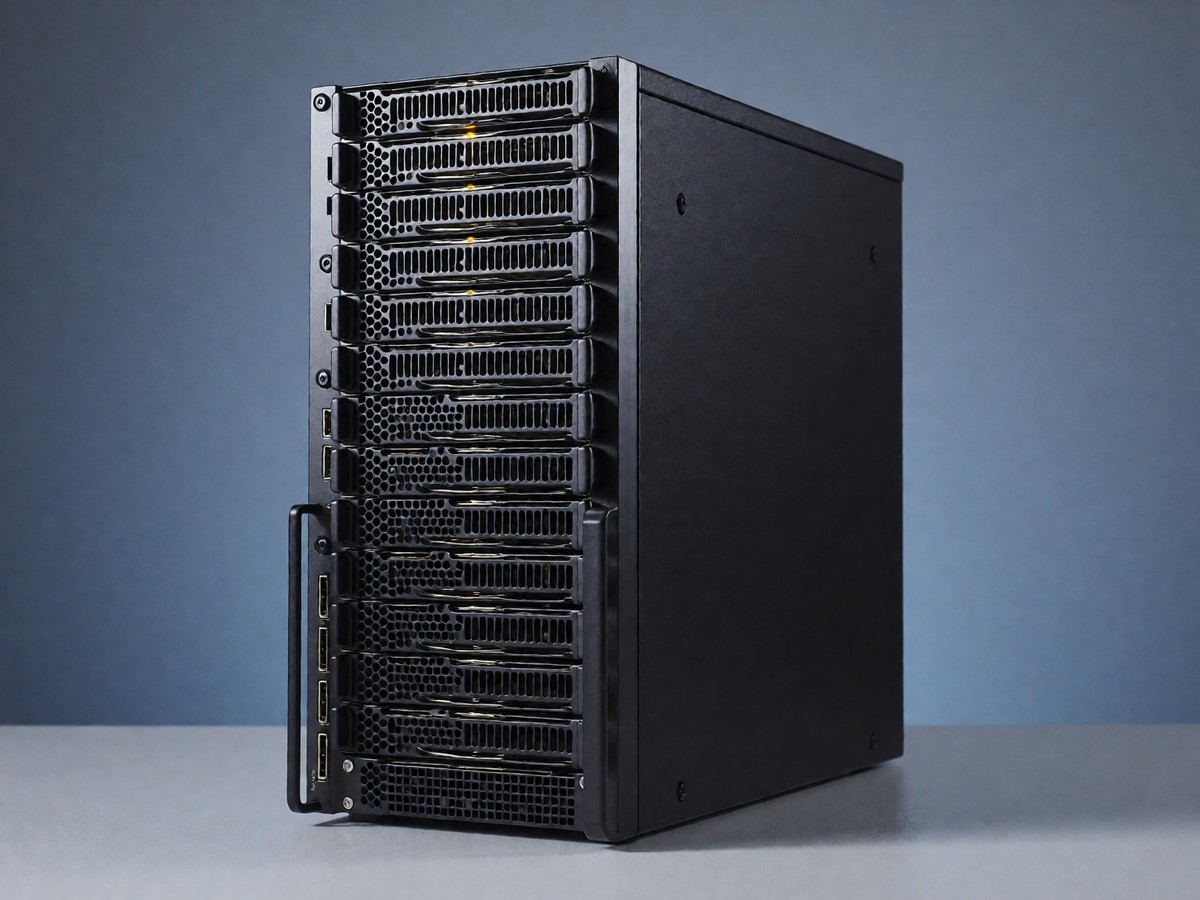
The German company Q.ANT recently rolled out its photonic processors to facilities operated by the cloud company IONOS as part of a pilot program. While regular GPUs process data by shuffling electrons, these photonic processors use waves of light to move information. Light does not generate heat as it travels and allows for more data to be processed simultaneously. This characteristic means photonic processors consume less energy and require minimal cooling, which addresses one of the largest cost sources for data centers.
The aim of this technology is not to replace GPUs, but to run them side-by-side as a coprocessor. GPUs excel at linear math, such as masses of additions and multiplications, but photonic processors suit complex, nonlinear calculations. Michael Fortsch, the founder and CEO of Q.ANT, says the overall problem is the cost generated by the huge amount of energy consumption. He states that the current cost driver is the access to the memory.
| Hardware Type | Primary Math Function | Data Movement Method |
|---|---|---|
| GPU | Linear math | Electrons |
| Photonic processor | Nonlinear math | Light waves |
Reducing memory access points
Q.ANT develops these chips to minimize the energy AI models consume. Michael Fortsch explains that the system executes complicated math in a single step where regular chips need thousands of steps. This process saves a significant amount of data or memory access points. Because the system requires less data to complete a job, it becomes more efficient.
The industry currently faces logistical challenges, a scarcity of components, and protests against data centers. While few photonic processors run inside data centers today, more than 30 teams of engineers are now developing AI models optimized for photonic computing. These engineers work to adapt software to the specific requirements of light-based hardware. Q.ANT faces challenges in trying to popularize this new class of hardware while AI labs try to build new data centers in places like Scandinavia to find cheap renewable energy.